

How to Set Stop Loss Orders in Trading
⏱️ Estimated Reading Time: 6 minutes
📝 Summary: This comprehensive risk management guide covers the psychology behind stop loss orders, introduces the “Trailing Stop” technique for locking in profits, explains the 1% capital rule, and demonstrates how to place stops using Fibonacci levels.
This is one of the most common challenges among traders: how to set stop loss orders in a way that protects your position without closing it too early? The good news is that setting stop loss orders using systematic tools like Fibonacci or Trailing Stops is relatively straightforward. In this article, we will review the fundamentals of placing stop loss orders, along with some advanced tips.
Table of Contents
Key Takeaways
- Emotional Shield: Stop losses protect you from “hoping” a losing trade will turn around.
- Dynamic Protection: Use a Trailing Stop to lock in profits as the trend grows.
- Capital Preservation: The 1% Rule ensures you can survive a string of 20+ losses.
- Fibonacci Precision: Place stops below the 61.8% or 78.6% levels to filter shallow corrections.
1. Should You Use Stop Loss Orders?
Recently, some opinions have circulated suggesting that using stop loss orders might not be recommended. If a professional trader believes these orders are unnecessary and is profitable without them, that’s their choice. However, if you’re a novice investor still trying to end the year in profit, you absolutely should use stop loss orders.
Emotions are your worst advisor. How many times have you held onto a losing position, hoping it was just a temporary correction? A stop loss removes the need for “hope” and enforces discipline.
2. The Concept Behind Stop Loss
When you enter a trade, you have a reason—a thesis. For example, “Price broke resistance, so it should go up.”
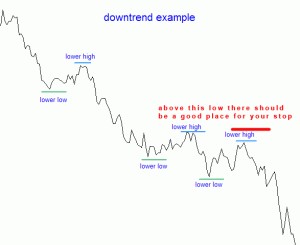
The Stop Loss is placed at the Invalidation Point: the price level where your thesis is proven wrong. If price returns below the broken resistance, it was a false breakout. You should not be in that trade anymore. The stop loss executes this logic automatically.
3. The Trailing Stop
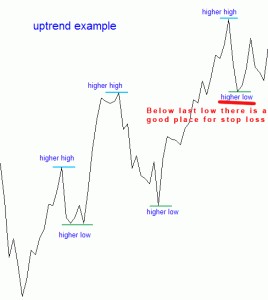
A Trailing Stop is a dynamic order that moves with the price. It allows you to let profits run while automatically securing gains.
- How it works: If you buy at $20 with an SL at $18, and price moves to $24, you can move your SL to $22. If price reverses, you exit with a $2 profit instead of a loss.
- Strategy: As price moves favorably, manually or automatically adjust the SL to break-even, then to profit zones.
4. The 1% Rule
Risk only 1% of your trading capital per trade. This is the golden rule of survival. For example, with a $20,000 account, only $200 should be at risk per position.
This rule helps you survive strings of losses. Even after 20 consecutive losing trades, you would still retain more than 80% of your account capital, leaving you in the game to fight another day.
5. Stop Loss Orders in Fibonacci-Based Trading
When trading using Fibonacci levels, placing stop loss orders becomes more precise:
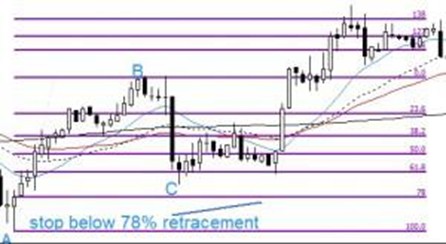
- Correction Trade: In a buy trade after a pullback, place the SL below the 61.8% or 78.6% retracement level.
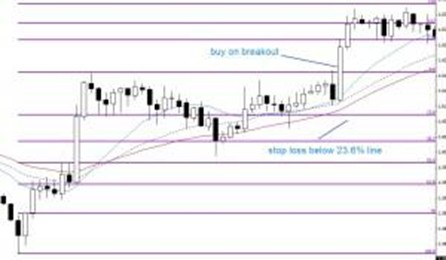
- Breakout Trade: Place the SL below the nearest retracement line that acted as support.
If price drops below these deep Fibonacci levels, it is often a sign the trend has failed or is undergoing a deep reversal. It is better to take a small loss than to hold a failing trend trade.
Trade responsibly.
Open an account with a regulated broker and get cashback on your trading volume.
Frequently Asked Questions
What happens if my Stop Loss is hit?
The trade is automatically closed, and the loss is realized. While painful, it protects the rest of your capital from a catastrophic move against you.
Can I trade without a Stop Loss?
It is highly risky. Without a stop loss, a single sudden market event (like a central bank announcement) could wipe out your entire account balance.
Does a Trailing Stop guarantee profit?
No, but it secures paper profits. If the market reverses, you exit with the gains locked in up to that point, rather than giving them all back.
⚠️ Disclaimer: The content of this article is strictly for informational purposes and does not constitute investment advice. FXRebate is a cashback and affiliate service, not a broker or fund manager; responsibility for trades and funds lies exclusively with the third-party broker. Trading with leverage involves high risks of capital loss. Partner links used do not generate additional costs for you.