

Currencies and Currency Pairs: What They Represent and How They Work
⏱️ Estimated Reading Time: 5 minutes
📝 Summary: This beginner’s guide defines what currency pairs are, explains the role of the U.S. Dollar, and categorizes Forex pairs into Majors, Crosses, and Exotics to help traders understand market liquidity.
A currency is defined as a system of exchange used within a specific country. The SWIFT payment system, developed in the 1970s to keep up with advancements in financial technology, assigned three-letter abbreviations to all currencies for easier identification. In the Forex market, these currencies are traded in pairs, expressing the value of one currency relative to another.
Table of Contents
Key Takeaways
- Base vs. Quote: The first currency is the “Base”, the second is the “Quote”. You buy the Base using the Quote.
- USD Dominance: The U.S. Dollar is involved in the majority of global Forex transactions (Major Pairs).
- Categories: Pairs are split into Majors (High liquidity), Crosses (No USD), and Exotics (Low liquidity).
- Risk: Beginners should avoid Exotic pairs due to high spreads and volatility.
1. The Major Currencies
The U.S. Dollar (USD) functions as the global reserve currency. Commodities like oil and gold are denominated in USD, and many countries peg their currency to it.
Apart from the USD, the most significant currencies on the Forex market include:
- EUR: Euro
- JPY: Japanese Yen
- GBP: British Pound Sterling
- CHF: Swiss Franc
- AUD: Australian Dollar
- CAD: Canadian Dollar
2. How Currency Pairs Work
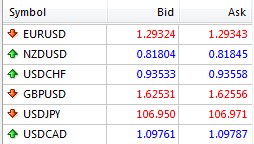
Currencies are always quoted in pairs (e.g., AUD/USD). This system allows us to determine how many units of the second currency (Quote Currency) are needed to buy one unit of the first currency (Base Currency).
Example: If AUD/USD is 0.95, it means 1 Australian Dollar costs 0.95 U.S. Dollars.
3. Classification of Pairs
Currency pairs are typically grouped based on their relationship with the USD and their liquidity.
Major Pairs
Major pairs are the most traded in the world and always include the U.S. Dollar. They offer the lowest spreads and highest liquidity. Examples: EUR/USD, GBP/USD, USD/JPY, USD/CHF.
Cross Pairs (Crosses)
These pairs consist of major currencies but exclude the USD. They are slightly more volatile than majors. Examples: EUR/GBP, EUR/JPY, AUD/JPY.
Commodity Pairs
These involve currencies from countries heavily dependent on commodity exports. Examples: AUD/USD, NZD/USD, USD/CAD.
Exotic Pairs
Exotics pair a major currency with one from an emerging economy. Examples: USD/PLN (Polish Zloty), USD/ZAR (South African Rand), USD/HKD (Hong Kong Dollar).
4. A Warning on Exotic Pairs
Caution for Beginners: Exotic pairs are characterized by lower liquidity and much higher spreads (transaction costs). While they can offer high volatility, they are generally not recommended for novice traders.
Ready to trade the majors?
Access competitive spreads on all major currency pairs and earn cashback on your volume.
Frequently Asked Questions
What is the most traded currency pair?
The EUR/USD is the most traded currency pair in the world, offering the highest liquidity and typically the lowest spreads.
Why should I avoid exotic pairs?
Exotic pairs often have very high spreads due to low liquidity. This means the price has to move significantly just for you to break even on the trade.
What is a “Cross” pair?
A Cross pair is any currency pair that does not include the U.S. Dollar (USD), such as EUR/GBP or AUD/JPY.
⚠️ Disclaimer: The content of this article is strictly for informational purposes and does not constitute investment advice. FXRebate is a cashback and affiliate service, not a broker or fund manager; responsibility for trades and funds lies exclusively with the third-party broker. Trading with leverage involves high risks of capital loss. Partner links used do not generate additional costs for you.