

The Day-Hour Strategy: Dual Timeframe Momentum
The “Day-Hour” Strategy is a medium-term trading system that aligns the daily trend with 4-hour entry signals. By filtering trades through a higher timeframe (D1) and executing on a lower one (H4), traders can significantly increase the probability of catching sustained moves while filtering out market noise.
Strategy Profile
Timeframes
D1 (Trend) + H4 (Entry)
Indicators
MA + MACD + RSI
Type
Swing Trading
1. Chart Setup & Configuration
You will need to open two charts for the same currency pair: one set to D1 (Daily) and one to H4 (4-Hour).
- Moving Average (MA): Shift 3. Apply this to both D1 and H4 charts.
- MACD (H4 Only): Settings 12, 120, 5.
- RSI (H4 Only): Levels 30 and 70.
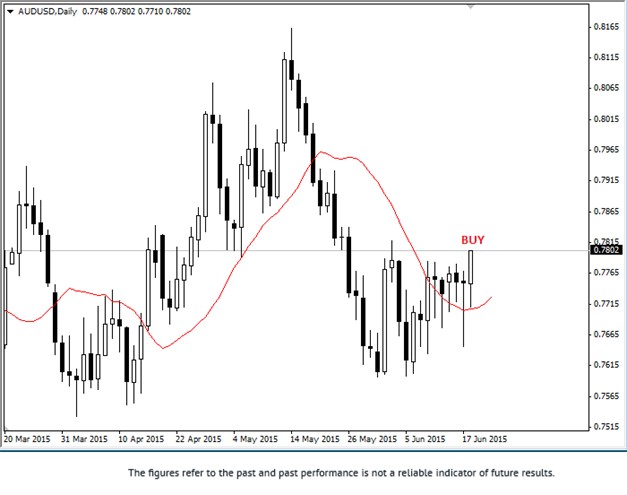
Step 1: Determine the Daily Trend (D1)
Before looking for trades, identify the major market bias on the Daily chart:
- Bullish Bias: If the D1 Candle Close is ABOVE the Moving Average -> Look ONLY for BUYS.
- Bearish Bias: If the D1 Candle Close is BELOW the Moving Average -> Look ONLY for SELLS.
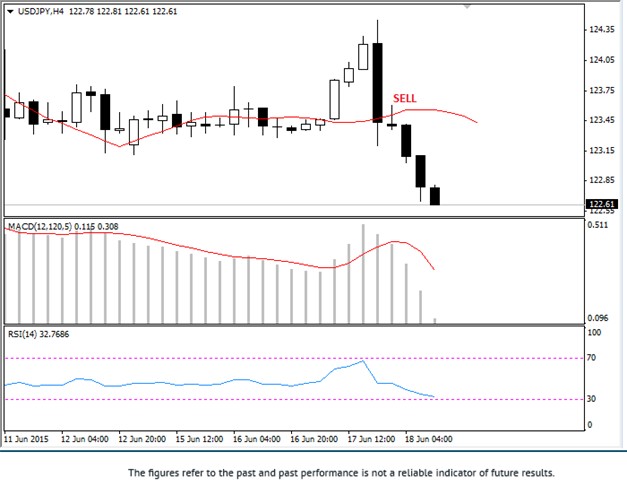
Step 2: Execute on H4
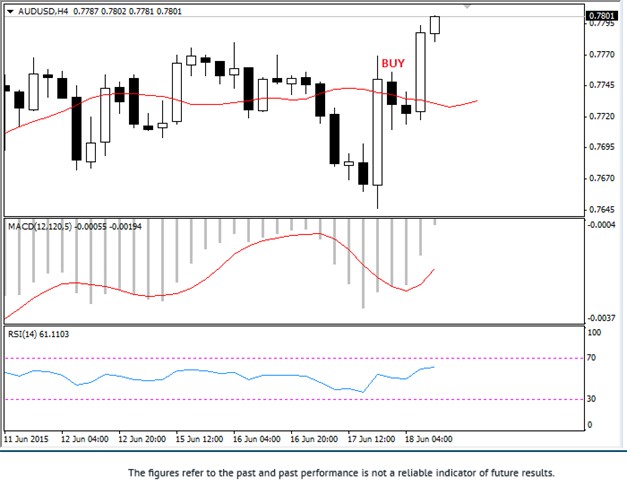
Long Entry (Buy Signal)
- Trend: Confirmed Bullish on D1.
- MACD: Histogram is above zero.
- RSI: Trending upwards (preferably crossing 50).
- Price: Candlestick closes above the Moving Average on H4.
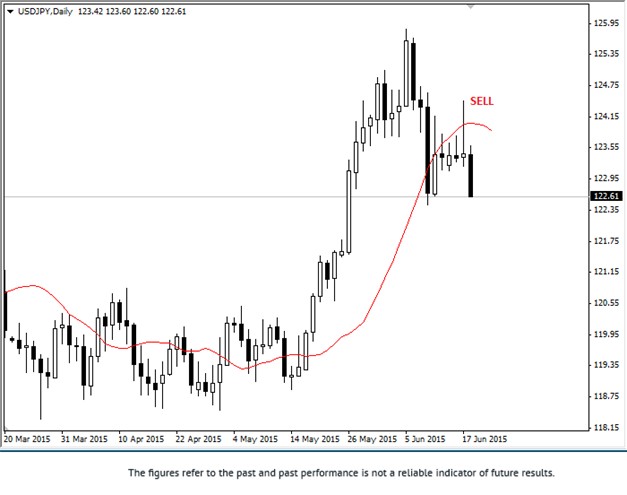
Short Entry (Sell Signal)
- Trend: Confirmed Bearish on D1.
- MACD: Histogram is below zero.
- RSI: Trending downwards.
- Price: Candlestick closes below the Moving Average on H4.
Trade Management
- Stop Loss: Approximately 50 points (pips) from entry.
- Take Profit: Target 80-90 points (pips).
- Risk/Reward: Aim for a ratio close to 1:1.8.
Swing Trading Made Better: Earn rebates on your trades while you hold them overnight.