Cognitive Biases in Trading: 8 Psychological Traps
⏱️ Estimated Reading Time: 6 minutes
📝 Summary: This guide explores 8 critical cognitive biases that sabotage traders, such as Loss Aversion and Confirmation Bias, and provides practical countermeasures like journaling and strict checklists to maintain rational decision-making.
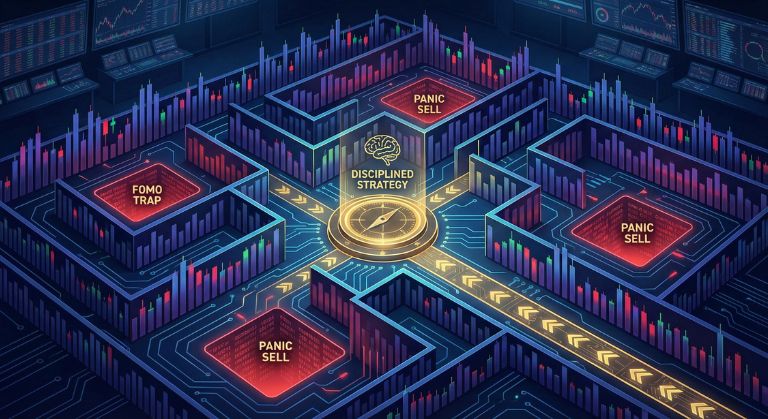
It is reasonable to assume that every trader—regardless of knowledge or experience—can be affected by cognitive biases. These are systematic deviations from rational judgment that reshape reality to fit one’s goals. In trading, where uncertainty is constant, these mental shortcuts can be devastating to your account balance. Understanding them is the first step to conquering them.
Table of Contents
Key Takeaways
- Pain vs. Gain: Humans feel the pain of a loss twice as intensely as the pleasure of a gain.
- Memory Trap: We give too much weight to recent events (Recency Effect), ignoring long-term stats.
- Echo Chamber: We actively seek info that proves us right (Confirmation Bias) and ignore red flags.
- Solution: A strict Trading Plan and Journal are the only effective vaccines against these biases.
1. Loss Aversion
The Trap: Losses loom larger than equivalent gains. Traders often suffer more anxiety from losing $1,000 than the joy they feel from gaining $1,000.
The Consequence: This leads to cutting winning trades too early (to secure the gain) and holding losing trades too long (to avoid realizing the loss). It destroys the Risk/Reward ratio.
2. Recency Effect
The Trap: Overweighting the most recent trades or news while neglecting the broader track record. If you lost your last 3 trades, you might believe your strategy is broken, even if it was profitable for the last year.
The Consequence: Strategy hopping. Traders abandon proven systems after a normal drawdown period, missing the recovery.
3. Confirmation Bias
The Trap: Seeking only information that validates your existing view. If you are long EUR/USD, you read only bullish news and ignore bearish economic data.
The Consequence: You stay in a bad trade because you have created a false narrative of safety, ignoring the market’s clear warning signals.
4. Sunk Cost Fallacy
The Trap: Persisting with a losing position because of the time, money, or emotional energy already invested. “I’ve waited this long, I can’t close it now.”
The Consequence: Past costs are irrecoverable. The market does not care how long you have waited. Holding a bad trade often turns a manageable loss into a catastrophic one.
5. Other Key Biases
- Gambler’s Fallacy: Believing that if an event happened frequently (e.g., 5 bullish candles), the opposite is due (a bearish candle). In reality, each event is independent.
- Bandwagon Effect (Herding): Buying because “everyone else is buying.” This usually happens at market tops, leading to poor risk-reward entries.
- Anchoring: Fixating on a specific price (e.g., your entry price). “I’ll sell when it gets back to break-even.” The market has no obligation to return to your anchor.
6. Practical Countermeasures
You cannot eliminate emotions, but you can manage them:
- Codify Rules: Write down exact entry/exit criteria. If the trade doesn’t fit the rules, don’t take it.
- Checklists: Use a physical checklist before every trade. “Am I trading this because of a signal or because I’m bored?”
- Trading Journal: Conduct periodic reviews (monthly) when you are calm. Audit your decisions to spot patterns of bias.
Master your mindset.
Start trading with discipline. Open an account and get rewarded for sticking to your plan.
Frequently Asked Questions
What is the most dangerous bias?
Loss Aversion is widely considered the most dangerous because it directly causes traders to ruin their risk management rules by holding losers.
Does experience eliminate bias?
No. Even professionals have biases. The difference is that they have systems and risk managers to prevent them from acting on those biases.
How does Outcome Bias affect me?
It makes you think a bad decision (like moving a stop loss) was “good” just because you made money this one time. This reinforces bad habits that will eventually cost you.
⚠️ Disclaimer: The content of this article is strictly for informational purposes and does not constitute investment advice. FXRebate is a cashback and affiliate service, not a broker or fund manager; responsibility for trades and funds lies exclusively with the third-party broker. Trading with leverage involves high risks of capital loss. Partner links used do not generate additional costs for you.