

Long Squeeze: What Does This Concept Represent and How Can We Avoid It?
⏱️ Estimated Reading Time: 5 minutes
📝 Summary: This guide explains the “Long Squeeze” phenomenon, where a sudden price drop forces long holders to sell, triggering a cascade effect. It analyzes a real-world DAX example and offers strategies to avoid this common bull trap.
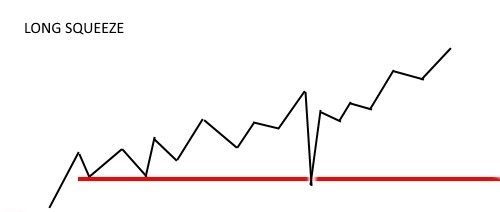
The long squeeze is a painful phenomenon for bullish traders. It occurs when a sudden drop in the price of an asset triggers panic, forcing investors to sell their positions to protect their capital. This wave of selling creates a feedback loop, driving prices down even further and faster.
Table of Contents
Key Takeaways
- Cascade Effect: A long squeeze is fueled by Stop Loss orders being triggered simultaneously.
- Bull Trap: It often happens after a strong uptrend, trapping late buyers.
- Liquidity: Avoid low-liquidity markets where squeezes are more violent and frequent.
- Re-Entry: Once the panic subsides, the lower price often presents a great buying opportunity.
1. Understanding the Long Squeeze
A key characteristic of a long squeeze is the formation of a new, deeper low that “flushes” weak hands out of the market. This abrupt decline is often unsupported by any fundamental change in the asset’s value. It may be triggered by:
- A minor news rumor.
- A large institutional sell order hitting thin liquidity.
- A technical break of a popular support level.
Once the market “digests” the event and the selling pressure evaporates, the price often snaps back up, leaving the sellers trapped at the bottom.
2. Strategies to Avoid the Trap
To mitigate the risks associated with a long squeeze, employ these defensive tactics:
- Avoid Low Liquidity: Stay away from markets or times (like holidays) where order books are thin. In these conditions, even small orders can cause massive spikes.
- Wider Stops: In liquid markets, consider using a wider stop loss (reduced position size) to withstand volatility spikes (“wicks”).
- Wait for Confirmation: If you are stopped out, do not revenge trade. Wait to see if the market reclaims the broken support level, confirming the move was a trap, before re-entering.
3. Case Study: DAX Future Example
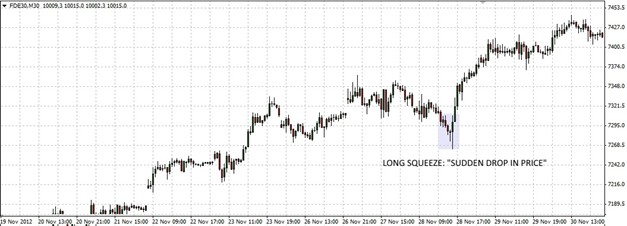
The chart below illustrates a classic long squeeze on the DAX Future index.
- Context: The index had been in an upward trend for several days.
- The Trap: A sudden drop occurred, breaking below the lows of the previous five days. This triggered the stops of anyone who had bought during the week.
- The Result: The “bull trap” lasted only about 3 hours (on an M30 chart). After clearing out the buyers, the index resumed its bullish trajectory and ultimately reached a new high.
4. Conclusion
Long squeezes are a mechanism for the market to transfer money from impatient traders to patient ones. By understanding that sudden, news-less drops are often liquidity hunts, you can avoid panic selling and perhaps even capitalize on the discount.
Don’t get squeezed.
Trade with a broker that offers deep liquidity and fast execution to minimize slippage.
Frequently Asked Questions
What is the difference between a Long Squeeze and a Short Squeeze?
A Long Squeeze forces buyers to sell, pushing prices down. A Short Squeeze forces sellers to buy (cover), pushing prices up.
Does a long squeeze mean the trend is over?
Usually, no. It is often a temporary correction that removes leveraged positions before the uptrend resumes. It is a “healthy” market reset.
How long does a squeeze last?
It can range from a few minutes (flash crash) to several days, depending on the timeframe and the volume of positions that need to be unwound.
⚠️ Disclaimer: The content of this article is strictly for informational purposes and does not constitute investment advice. FXRebate is a cashback and affiliate service, not a broker or fund manager; responsibility for trades and funds lies exclusively with the third-party broker. Trading with leverage involves high risks of capital loss. Partner links used do not generate additional costs for you.