
Elliott Wave Theory: A Practical Introduction
�?��? Estimated Reading Time: 12 minutes
�? Summary: This guide simplifies the Elliott Wave Theory into a practical trading system. It covers the 5-wave impulse, specific tools for identification (AO, DMA), ZigZag vs. Irregular corrections, and a 4-step execution strategy.
Many beginners who come across the Elliott Wave Theory encounter difficulties in translating its principles into practical application. A key challenge lies in the numerous possible interpretations when identifying wave structures, compounded by the fact that market movements only follow ideal wave patterns for relatively short periods.
Table of Contents
1. Basic Concepts & Impulse Rules
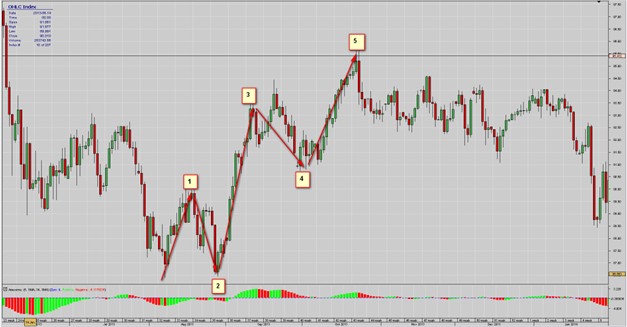
Core Rules of the Impulse Wave
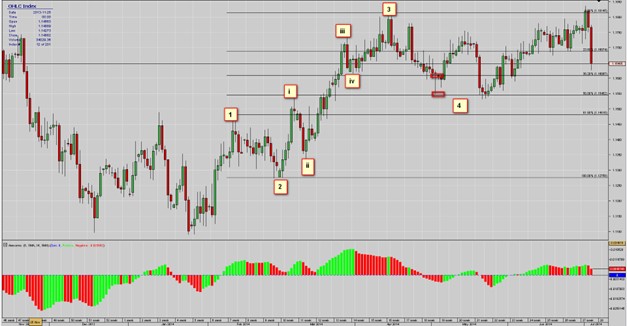
- Wave 2 must not retrace more than 100% of Wave 1.
- Wave 4 must not retrace more than 100% of Wave 3.
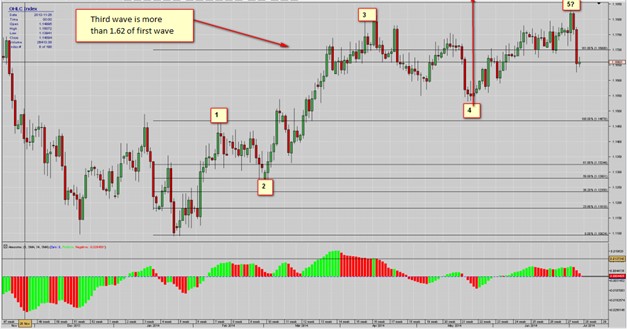
- Wave 3 must always exceed the peak of Wave 1 and is never the shortest wave.
- Wave 4 should not enter the price territory of Wave 1.
2. Tools for Identifying Waves
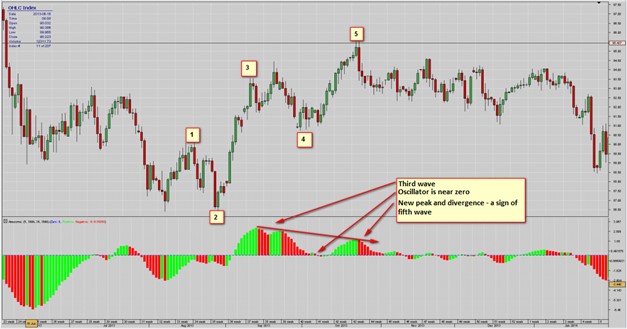
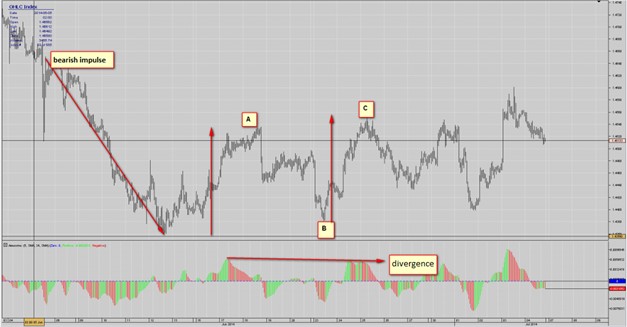
- Awesome Oscillator (AO): Compares short-term (5-period) and long-term (34-period) momentum. The strongest momentum spike typically indicates Wave 3. If the oscillator dips toward zero and creates a divergence, it suggests Wave 5.
- 7-period DMA (Displaced Moving Average): Shifted 5 periods to the right. A break below this often signals Wave 5's completion.
3. Retracement, Range & Proportions
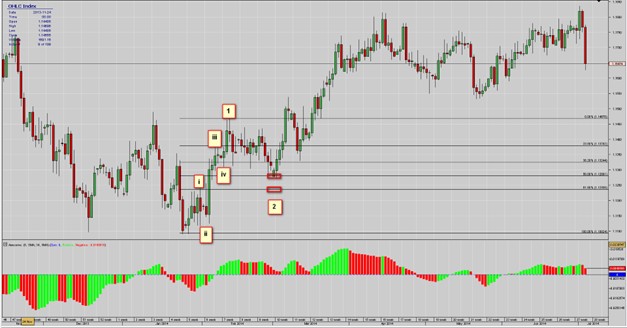
- Wave 2: Usually retraces 50% to 62% of Wave 1.
- Wave 4: Typically retraces 38% to 50% of Wave 3.
Wave Proportions
4. Corrective Wave Structures
1. Zigzag Correction (5-3-5)
- Wave A: 5 waves opposite the impulse.
- Wave B: 3 waves (~50% of A).
- Wave C: 5 waves opposite the trend.
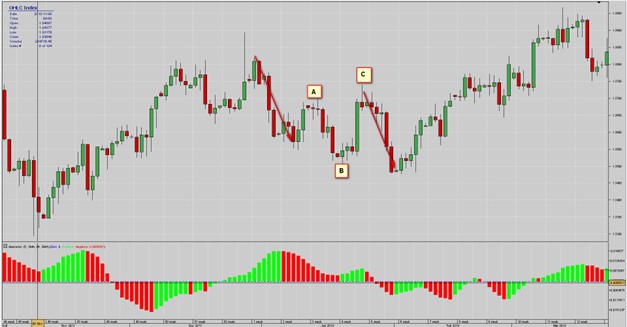
2. Irregular Correction (3-3-5)
5. The 4-Step Trading Strategy
Step I – Identify the Impulse
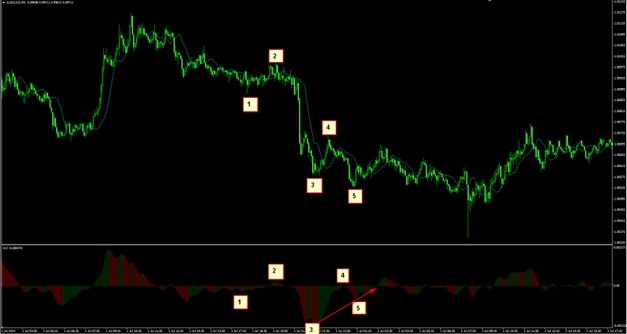
Step II – Confirm End of the Impulse
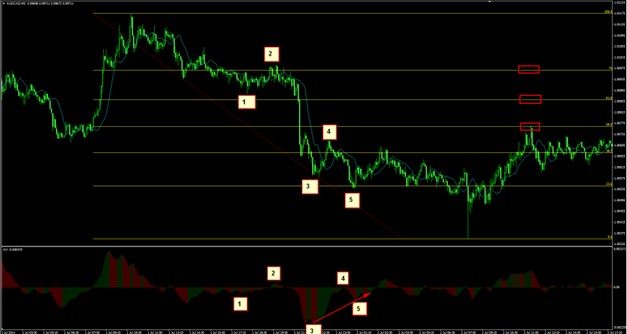
Step III – Define Wave C Range
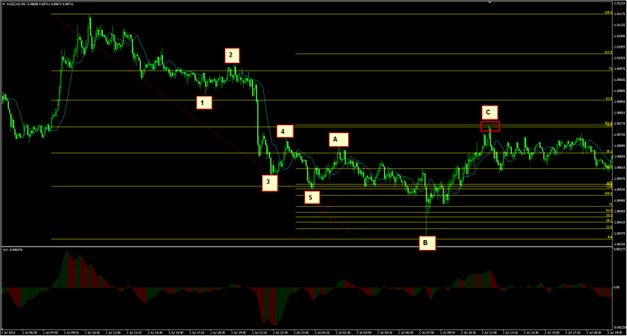
Step IV – Execute Trade
Apply the Theory.
Use advanced charting tools to count waves and spot setups on a risk-free demo account.
Frequently Asked Questions
Is the Irregular Correction common?
Yes, in strong trends, the Irregular (Flat) correction is surprisingly common because market participants are eager to resume the trend, pushing Wave B to a new high/low.
What timeframe is best?
Elliott Wave works best on H1, H4, and Daily charts where noise is reduced compared to lower timeframes.
Why use the Awesome Oscillator?
It provides an objective way to count waves (Wave 3 usually has the highest peak) and spot the divergence typical of Wave 5, removing subjectivity.
⚠️ Disclaimer: The content of this article is strictly for informational purposes and does not constitute investment advice. FXRebate is a rebate and affiliate service, not a broker or fund manager; responsibility for trades and funds lies exclusively with the third-party broker. Trading Derivatives carries a high level of risk to your capital and you should only trade with money you can afford to lose. Trading Derivatives may not be suitable for all investors, so please ensure that you fully understand the risks involved, and seek independent advice if necessary. Partner links used do not generate additional costs for you.